



Tory Stinnett, Executive Director of the Greater Eastern Oregon Development Cooperation
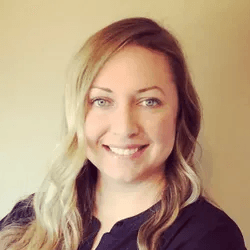
When Tory Stinnett became Executive Director of the Greater Eastern Oregon Development Corporation (GEODC) in December 2025, she stepped into a role that asks a lot of one person: strategist, steward, and advocate. GEODC serves six counties, 36 incorporated cities, the Confederated Tribes of the Umatilla Indian Reservation, and the Burns Paiute Tribe — a sprawling geography with deep roots and distinct needs. "The job is part strategy, part stewardship, and part advocacy," she says. "I work to make sure rural and frontier communities have a strong voice with local, state, and federal partners."
Tory graduated from Oregon State University in 2011 with a Bachelor of Arts in Psychology as a fourth generation Beaver. Her early career moved between two very different worlds: as a Psychiatric Technician at Albertina Kerr, supporting children ages five to seventeen in a short-term subacute facility (short-term, intensive medical and rehabilitative care), and as Food and Beverage Manager at Charbonneau Golf Club, where she led the transformation of a snack bar into a full food, beverage, and catering operation. "Between those two worlds, I learned how to care for people in hard moments and how to run a small business from the inside out," she reflects.
In 2017, she moved to Grant County, first as a Child Welfare Service Specialist with the Department of Human Services, then as a Victim Intervention Specialist with the District Attorney's Office. In 2020, she stepped into economic development as Grant County's Economic Development Director, a pivot that felt, in retrospect, like the natural next step. "Economic development is one of the most direct ways to support that whole picture," she says. "And having run a small operation myself, I know how much one thoughtful resource at the right moment can change the trajectory of a business."
She joined GEODC as Deputy Director in 2023 before assuming the Executive Director role. Her path — from psychology to hospitality to child welfare to economic development — reflects a consistent orientation toward people and place, toward what communities need and what makes them resilient.
That orientation is part of what drew her to the Biz Harney Opportunity Collaborative table. "What makes it work is the table itself," she says. "Local government, nonprofits, tribal economic development, and small business support all sitting down together to figure out what Harney County needs. That kind of cross-sector collaboration is exactly the model rural communities benefit from. Eastern Oregon is full of dedicated people doing meaningful work in their communities, and I feel lucky to partner with so many of them. The strength of this region has always been its people, and that's what makes this work worth doing."
Outside of her work across Eastern Oregon, Tory's world centers on family — her husband, their son, and three small dogs — with time spent fishing, hiking, and gardening.
