



Rob Frank, Harney County Commissioner
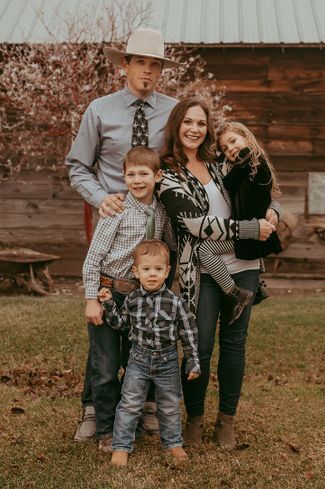
Rob Frank's path to becoming a Harney County Commissioner winds through classrooms, ranches, community boards and a saddle shop—a journey that has given him a unique perspective on what it means to serve rural Oregon.
Born and raised in Lake County, Rob has always had an affinity for the Great Basin. After high school, he pursued his goal of becoming an agriculture teacher, eventually landing at Crane Schools where he taught ag for five years. It was during this time that he met his wife Kellie, who moved to Crane after they were married and began working for the Farm Service Agency (FSA). When the demands of running a single-teacher ag program began conflicting with time for family, Rob made a career shift that would define the next chapter of his life.
While Kellie advanced in her FSA career, Rob spent several months at the ZX Ranch learning to cowboy. When she returned to Burns as a county executive director, he found ranch work locally. As their family grew and childcare proved scarce, Rob became a stay-at-home dad while continuing to day work. Out of necessity—needing a larger saddle—he taught himself saddle-making in the family garage. What began as a practical solution evolved into Weeping Heart Custom Saddles, a business he continues to operate alongside his commissioner duties.
Rob's commitment to civic engagement has deep roots. His involvement in FFA during high school instilled what he calls "a commitment to civic duty and to leadership." Over the years, he has participated in local and state Farm Bureau activities, served on the planning commission for six years, the hospital board, the school board. He ran unsuccessfully for commissioner about ten years ago but remained engaged with county government.
When former Commissioner Kristin Shelman encouraged him to run for her seat, Rob decided the time was right despite having "a lot of irons in the fire." One of Rob's most significant realizations has been the power of collaboration. Initially skeptical of HDP ten to twelve years ago, his perspective shifted dramatically when he first attended a Youth Changing the Community Collaborative meeting during his time on the school board. "I was kind of blown away when I came to a meeting and saw that they have all the vested interests at the table," he recalls. "This is what true collaboration should look like."
His education at the University of Nevada, Reno and Oregon State University—where he earned both bachelor's and master's degrees—introduced him to theories of collaboration and multiple land use planning. But it was HDP where he saw those theories come to life. "For them to get environmental special interests and landowners and federal agencies and all the people with vested interest at the same table and spend enough time building relationships to humanize each other so that they could actually realize we all want the same thing was just awesome."
As the Court's informal Natural Resource Liaison, Rob has engaged particularly with HDP's Harney Basin Wetlands Collaborative and stays abreast of the work of the Harney County Wildfire Collaborative and the Harney County Forest Restoration Collaborative through the coordinator of these two collaboratives, Aaron Johnston who serves on the Natural Resource Advisory Committee.
Recently, Rob has been part of unprecedented meetings bringing together the Burns Paiute Tribe, the cities of Burns and Hines, and the county. "Several of the players at the table, including the tribe, said this has never happened," Rob notes. "We have never all sat down and talked about how we're addressing issues."
Outside his public service, Rob hopes to spend more time cowboying and has begun introducing his children to hunting. Working with livestock as a family has "been really enjoyable and rewarding".
Rob's journey from agriculture teacher to craftsman to county commissioner reflects a consistent thread: a belief in building relationships, developing leadership, and bringing people together around shared interests. It's an approach that has found its fullest expression in his appreciation for collaborative culture of Harney County—and in his conviction that Harney County's example has something important to teach the rest of Oregon.
