



Reese Mercer, Western Beavers Cooperative
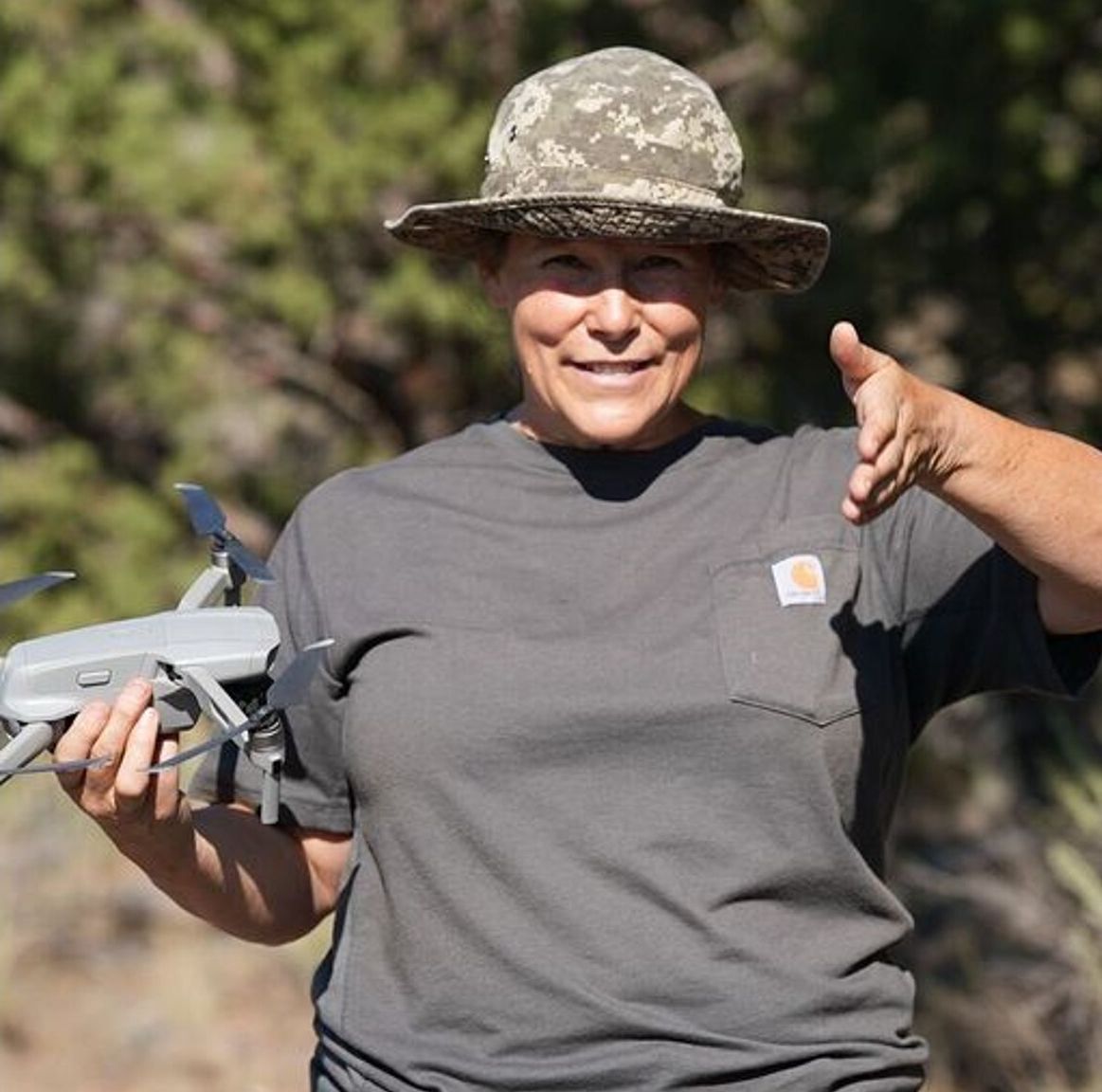
Growing up along a stream in northern California and spending her early summers with ranching families in Redding, California, Mercer developed an early comfort in small streams and working landscapes that still shapes her today. That intimacy with the land never left her, even as her career took a more traditional turn. She spent years working in business and technology, building skills in project management and organizational development. But the pull of the outdoors proved stronger than the pull of the office. "I made the shift out of the office and into the field," she says, "and I have not looked back since."
Her path toward beavers began, as many good things do, with a book. "It started early with a book called Three Against the Wilderness that I read as a teenager," Mercer recalls. "That story stuck with me—especially seeing how beavers shape the land in real, physical ways." Years later, while participating in stream restoration projects beginning in 2016, she began to see that shaping firsthand. "Not as an idea, but by seeing it on the ground—how water, vegetation, and channels respond where beavers are active." What she witnessed convinced her that something essential had been lost. "These systems don't function the same without them," she says. "You can see the difference."
After founding and building an earlier beaver program in 2019, Mercer established Western Beavers Cooperative, with its approach grounded in lessons from that earlier work. "The real work does not come from the top down," she explains. "It has to come from within each local community." The cooperative model reflects that conviction—emphasizing peer-to-peer learning, shared problem solving, and local capacity over outside delivery. "Landowners in these landscapes are hands-on and self-reliant. They are not looking for outside 'services' as much as they are looking for practical guidance they can trust."
Mercer's connection to the Harney Basin came through one of those unplanned roadside moments that tend to define life in rural Oregon. Stopping for gas at The Narrows on her way to meet a landowner at Black Diamond, she crossed paths with Dominic Bachman, a Malheur National Wildlife Refuge Aquatic Biologist and a partner of the Harney Basin Wetlands Collaborative. "He even helped pump gas while the café was busy," she laughs. That chance encounter led to introductions with Brenda Smith and others at High Desert Partnership, and a growing exchange of knowledge about beaver history and potential in the region.
Mercer is candid about where things stand. "Not many yet, to be honest," she says of concrete projects in the Harney Basin — but she sees growing regional interest as a meaningful first step. "That is usually where it starts." For Mercer, the deeper case is a long one: three million years of beaver activity shaped the landscapes we know today, and the 200 years since their removal have made the consequences clear. "The land doesn't function as it should without their presence," she says.
On any given day, Mercer might be checking trail cameras, surveying stream miles, meeting with landowners, or writing grants—work that follows seasons more than schedules. "What I enjoy most is working with people in rural communities who take a long view of the land," she says. "There is a different pace and a different kind of thinking, one that follows seasons, not deadlines." Even her weekends tend to follow the water. "I spend a lot of my weekends out on streams learning what I can about our High Desert beavers," she admits.
For Mercer, beaver recovery is fundamentally a community project—measured not in quick wins but in the slow rebuilding of conditions that allow these animals to return and stay. "A return of beavers in these landscapes is not something that happens quickly," she says. "It takes time, patience, and local commitment. The goal is not just to bring beavers back, but to rebuild the conditions that allow them to stay. That work has to be rooted in the people and places where it is happening."
